Most businesses that look strange from the outside make money for one of four reasons:
- They bill monthly for something the customer never wants to think about again.
- They do work that repels anyone with better options.
- They graft a proven concept onto real estate that already has traffic.
- They sell a skill the buyer could learn and will never want to use.
Novelty in the category itself is rare, and it usually loses. Novelty in packaging, in route density, or in willingness to handle something unpleasant is where the margin sits.
In this article, we are going to explore some of the craziest business ideas that have proof of concept, are generating serious revenue, and growing!
1. Dog waste removal
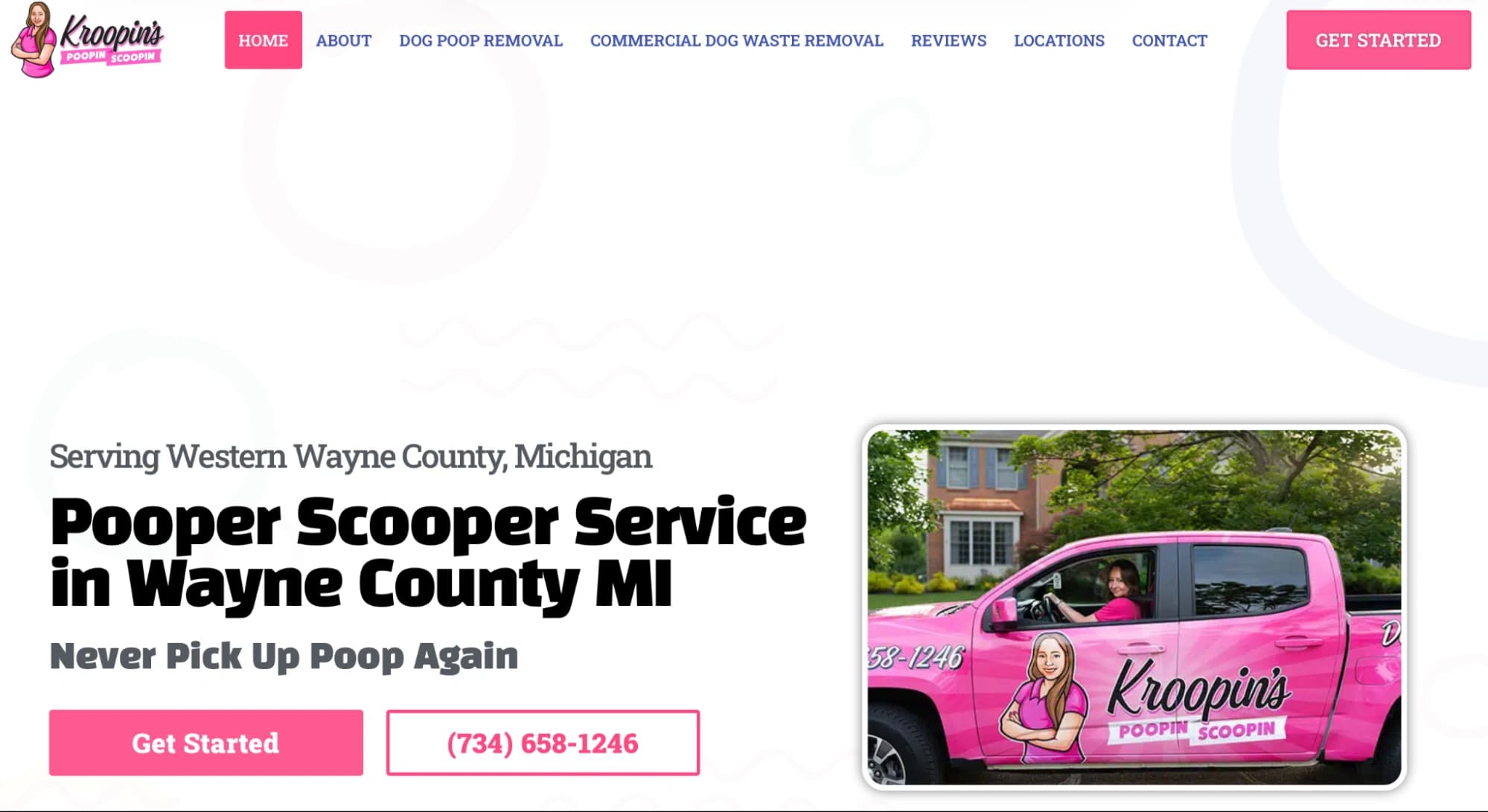
Erica Krupin was drinking coffee in her Northville, Michigan backyard in 2018, watching her pitbull Java squat, when she worked out that she would happily pay someone else to deal with it. She had already tried bartending on golf courses, esthetician work, and thirteen years as a pharmacy technician. She launched Kroopin's Poopin Scoopin that August and quit the pharmacy in February 2020, weeks before the pandemic.
The startup cost was about $1,000:
- a children's gardening rake
- trash bags
- gloves
- a dust pan
- disinfectant
- an LLC
- insurance
- a domain
- a cargo trailer hitch bolted to her Chevy Cobalt
Waste goes into the customer's own outdoor bin, double-bagged, which is why she has never bought disposal equipment. Weekly service runs $87 a month; twice-weekly is $156; a one-time cleanup is $50. CNBC reported the business tracking toward $250,000 in annual revenue by the end of 2025.
March and April are peak, when the snow melts and two months of hidden waste surfaces at once. Krupin calls it the Brown Super Bowl. The disgust barrier is the whole moat; very few entrepreneurs are willing to enter this category, and the ones that do generally don’t systematize all that well.
There is an exception though. William Milliken and Levi Swartz in Spokane Valley, WA started Swoop Scoop with a similar idea, getting 350 customers in their first three months. In 2025, they generated $3 million in sales!
2. Portable sanitation
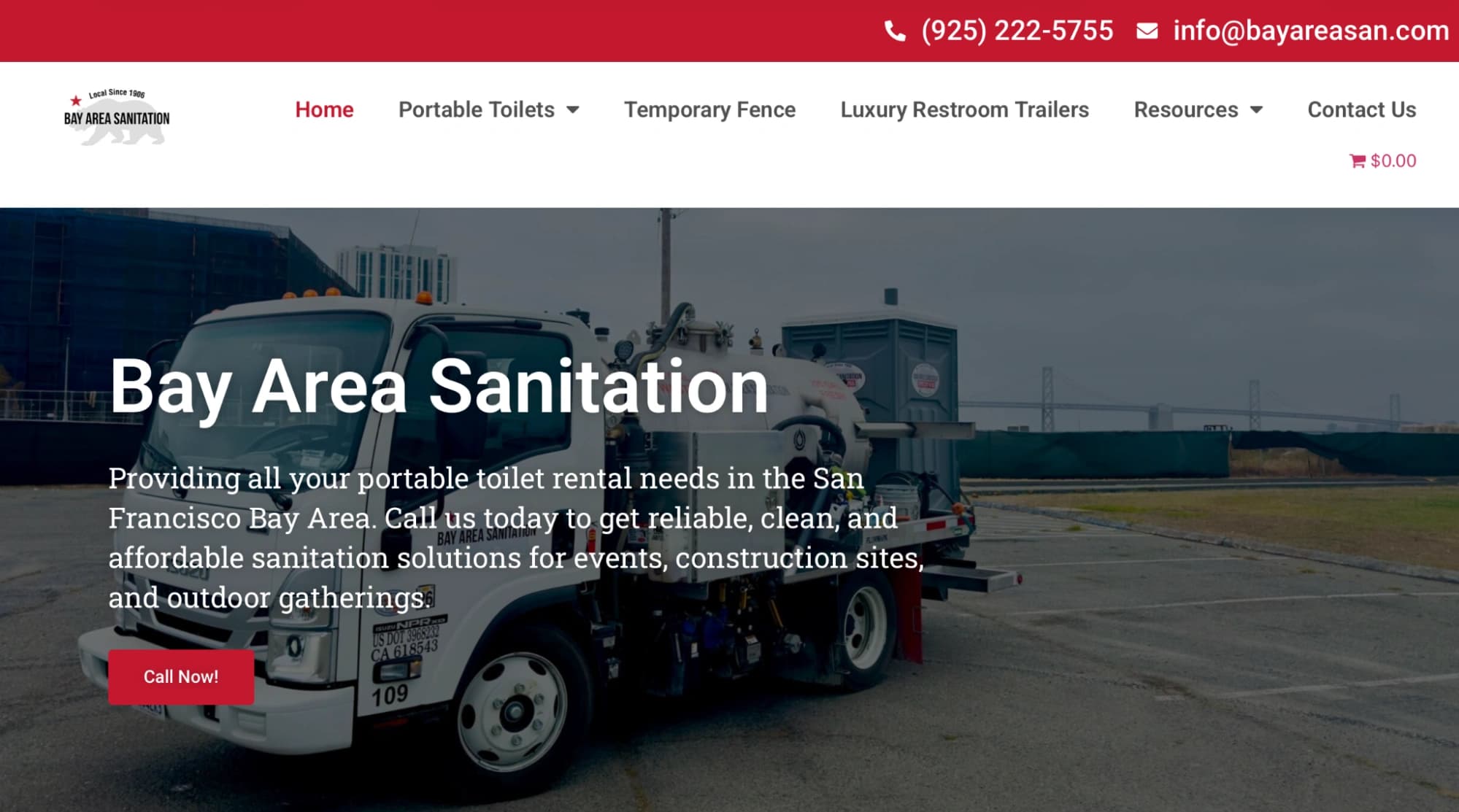
Some numbers before we get started: $4.3 million a year, at a net margin of roughly 22%, renting portable toilets a short drive from Google and Nvidia. Daniel Tom, 31, told CNBC in January 2026 that the bulk of his revenue from Bay Area Sanitation comes from long-term placements rather than events, because a unit dropped at a construction site stays for months and bills every week it sits there.
- Long-term rental: from $160 per month, weekly cleaning included
- Event rental: $239 to $399 per booking
- Labor: ~30% of revenue across 19 employees, his largest single expense
- Entry cost: ~$800 per rentable toilet, ~$160,000 per vacuum truck, all-in costs: $250,000 realistically
- Market structure: ~$3.3 billion in the U.S., no operator above 5% share
The idea is simple, but works incredibly well. The Bay Area is home to some of the largest companies in the world, with many of them building out new offices or retrofitting existing ones. There is always construction work happening, and many of them need to sign on for long-term contracts to mitigate turbulence between jobs.
3. Student-staffed junk removal
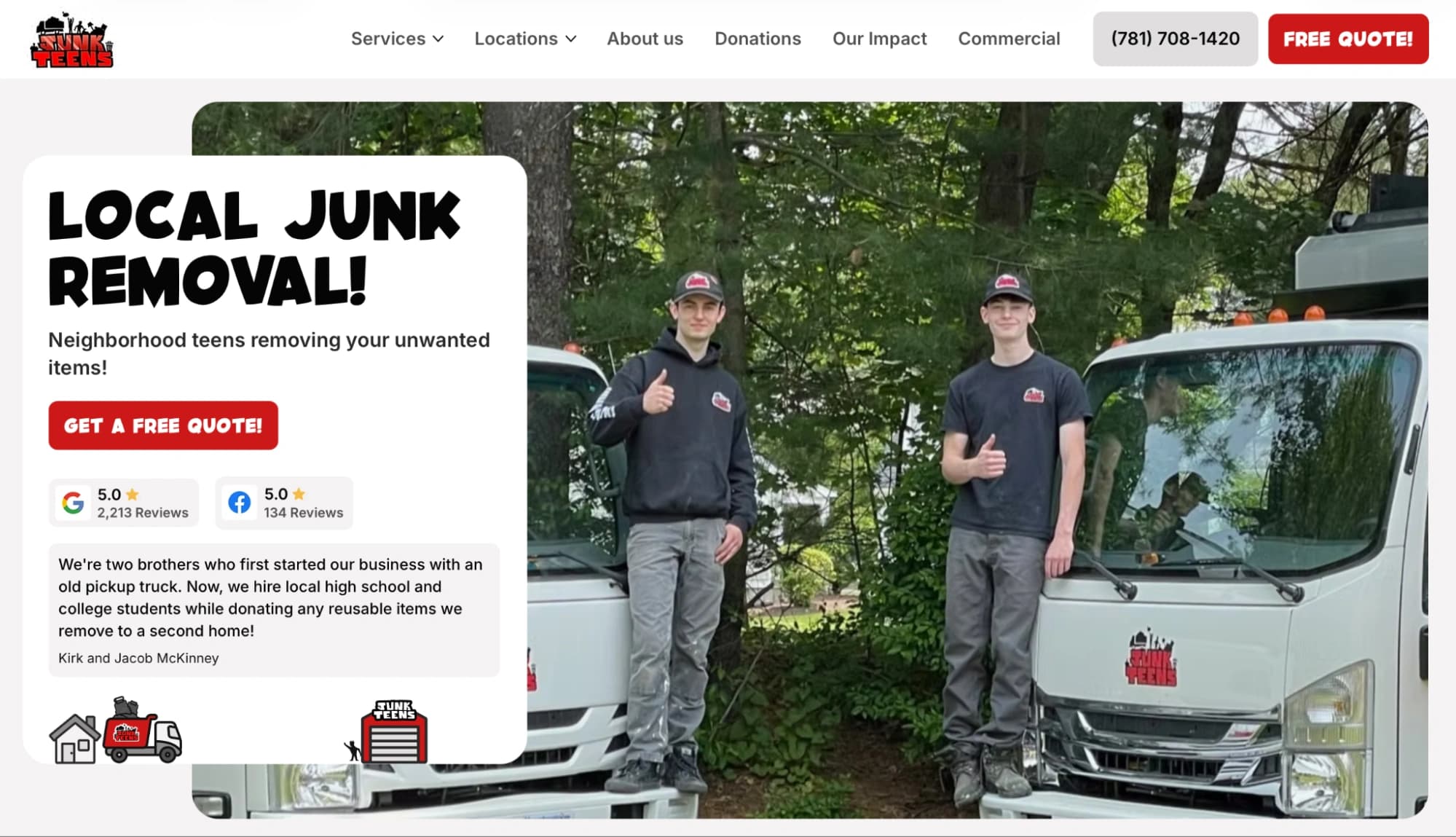
Kirk and Jacob McKinney bought a used 2006 Ford F-150 for $4,000 with their own money during the pandemic and took whatever work appeared:
- Landscaping
- Moving gigs
- Hauling
Junk removal turned out to be both the most profitable and the most interesting part, and customers responded specifically to hearing that items were being resold rather than dumped. That led to the birth of Junk Teens.
The company now employs ten people full-time and another ten to fifteen part-time, all of them high school, college, or gap-year students. Five dump trucks cover two eastern Massachusetts locations between Boston and Cape Cod, with two more trucks planned.
The brothers told CNBC in March 2026 they project $5 million in annual revenue by year end, with a plan to cover the rest of Massachusetts before moving down the East Coast.
4. A speakeasy hidden in a gas station
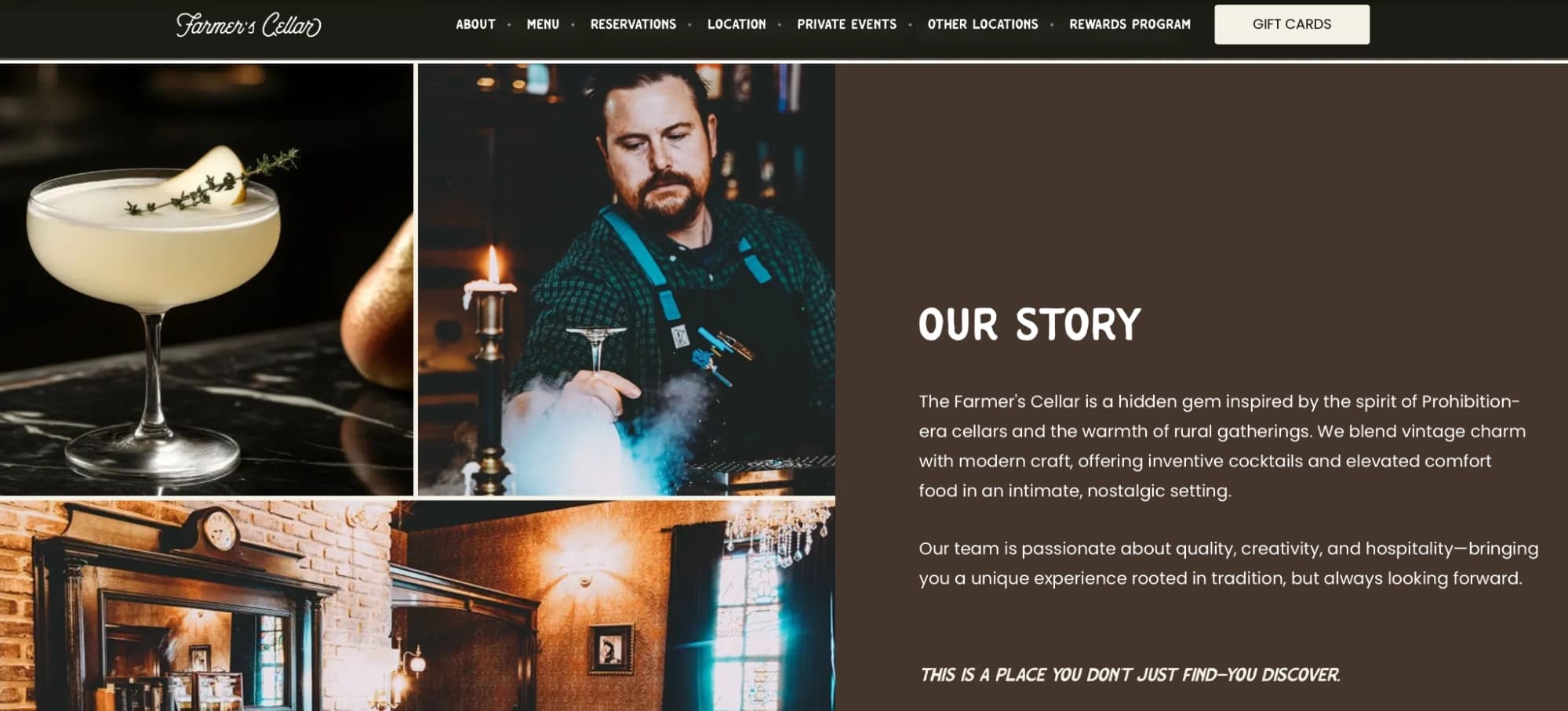
In 2024 Tony Donatell, 46, took on an empty storefront beside an Amoco convenience store in Lakeville, Minnesota. He had bought his first gas station seventeen years earlier in Eagan, chosen partly because the building already had fume hoods and cooking equipment. In May 2025 he opened The Farmer's Cellar in the vacant space; an upscale cocktail bar reached through what looks like a cooler door, no televisions anywhere inside.
The combined operation of the gas station, convenience store, and hidden bar brought in almost $5 million in its first year, according to documents CNBC reviewed.
The Cellar was profitable within its first month. Friday and Saturday nights run a near-constant line. Donatell now owns twelve businesses across the Twin Cities under the Wondrous Collective umbrella, and the kitchen sits physically between the convenience store and the bar, serving both menus off one line.
The concept isn't new. Paying convenience-store rent for it is, and the fuel pumps keep generating traffic on the nights nobody wants a cocktail.
5. A burrito shop in a Home Depot parking lot
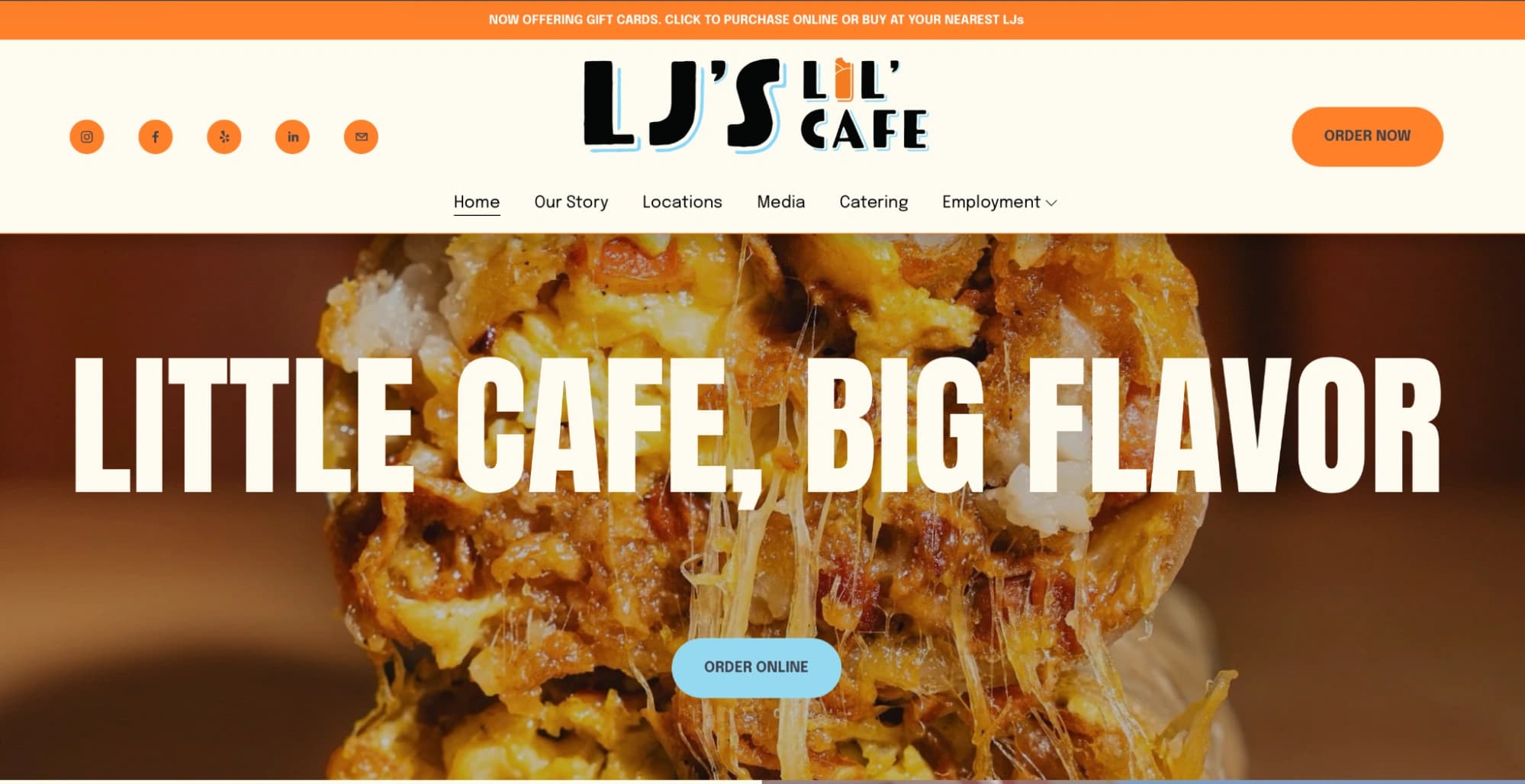
Contractors buy breakfast before 7 a.m., they buy it every weekday, and they buy it wherever they are already standing. Lydia Holmes and John Clarke, who met in 2012 working at a Seasons 52 in Costa Mesa and had no formal culinary training, opened a 200-square-foot shed in an Orange County Home Depot parking lot in 2021 to sell them burritos, called LJ’s Lil’ Cafe.
Sales were slow until Eater LA published a rave review. The next day there was a line, and they hit a $1,000 sales day almost immediately. Waits eventually stretched to two and three hours.
- Original price: $8.75 per burrito, currently $15.99
- Second location: an Orange, California storefront bought for $148,000, opened July 2025
- 2025 gross: just over $1 million at the shed, nearly $1.3 million at the storefront
- 2025 net profit: roughly $431,000
The $2.3 million combined figure comes from documents reviewed by CNBC Make It. Most restaurant marketing budgets exist to solve a problem these two solved by picking a landlord whose customers were already the target market.
6. Negotiating car purchases
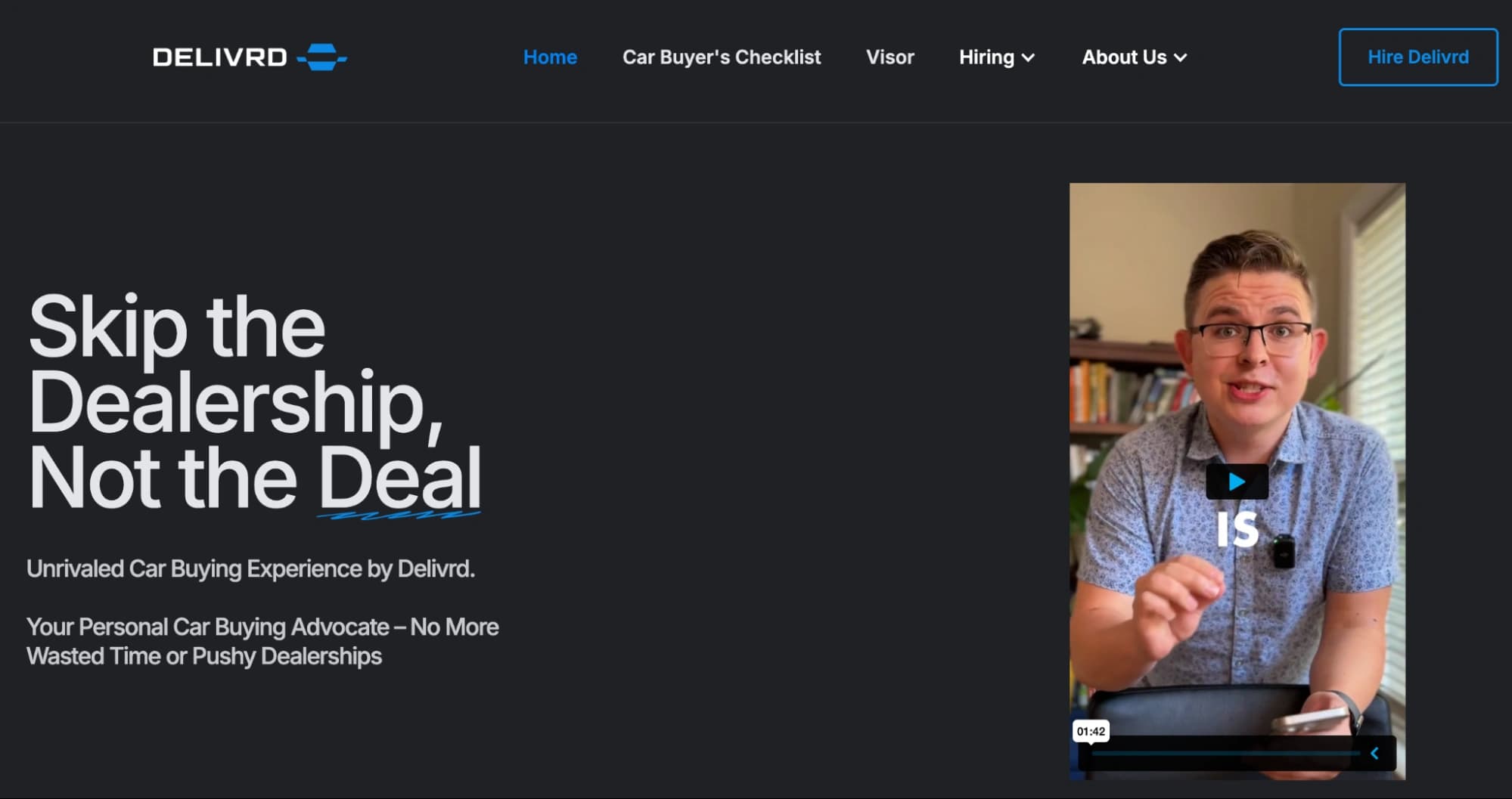
"I tell almost everyone who calls me not to hire me," is how Tomislav Mikula describes his pitch for Delivrd. He gives the methodology away free on social media and tells prospects that anyone with time, patience, and a dealership they trust should keep their money.
They hire him anyway. Delivrd charges a flat $1,000 to handle a car purchase for someone who does not want to walk into a dealership, and so far, Mikula, 33, has closed over 3,000 deals with Delivrd.
Revenue was $2.3 million in 2025 against $1.5 million in costs; payroll, software, legal and accounting, spread across fifteen fully remote employees. He is pacing toward $3 million and 400 to 700 deals a month in 2026. Delivrd leads by explaining the value proposition for hiring them: customers save an average of $6,300 while spending $1,000 on his services.
He pays himself about $186,000 and banks a full year of salary for each person before hiring them.
Before launching, Mikula spent $10,000 paying a hundred people to describe what they actually wanted from buying a car. The responses were surprising; people didn’t care much about price but instead focuses on control, clarity, and not having their wants properly addressed. Despite giving out a playbook for free, people still go to him because now he has a track record and some verified metrics to back what his company can offer.
7. Flipping abandoned storage units
A storage unit sold for $10 in early 2024. Inside was a carbon dioxide canister that resold for $40. The buyer was Michael Haskell, then a high school student who had recently caught a rerun of Storage Wars, and for the following year he spent Saturdays and Sundays at lockers and got himself back to school by Monday morning.
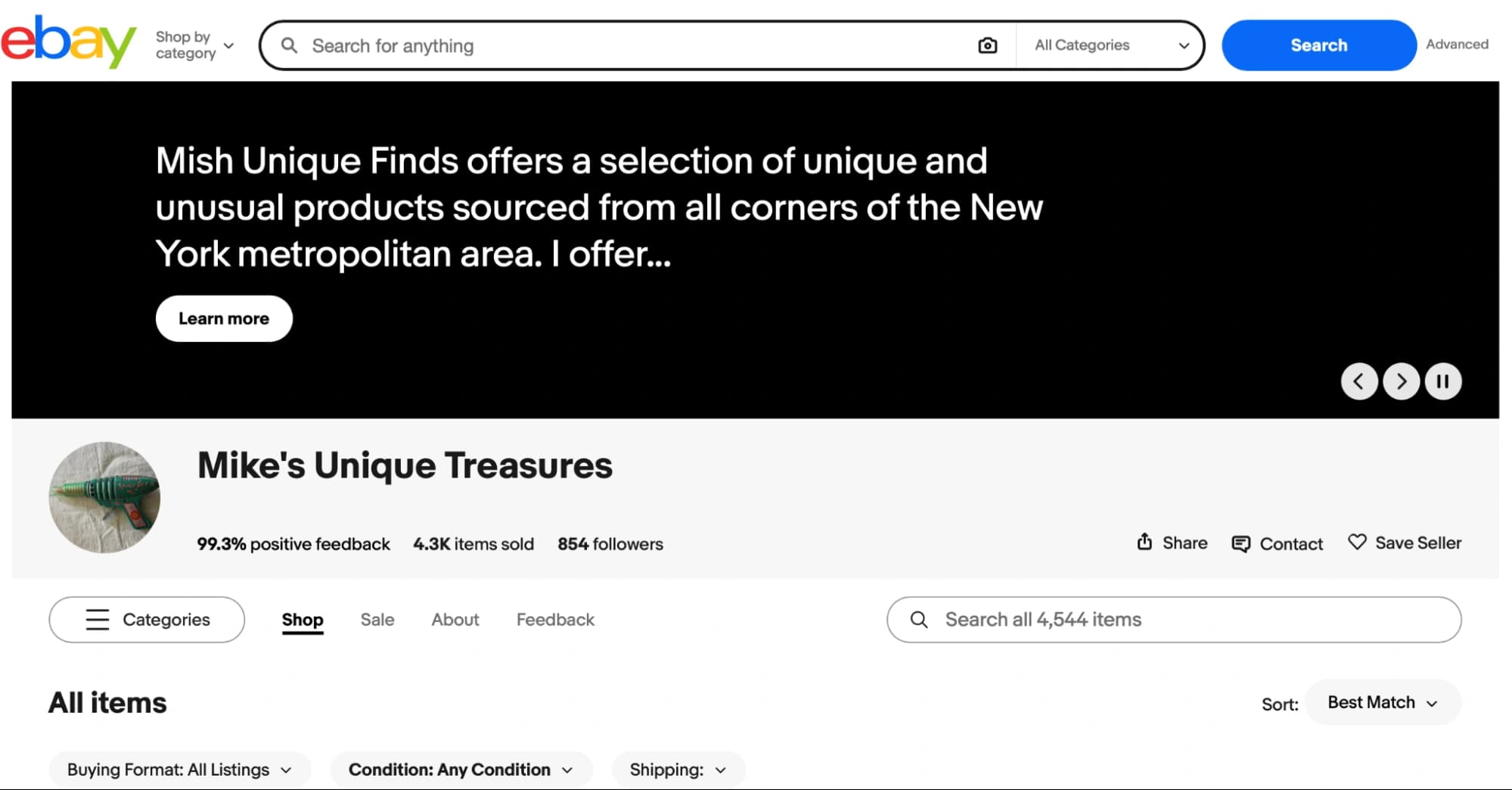
Mike's Unique Treasures now brings in $135,000 a year. Haskell graduated in June 2026 at eighteen. The business doesn’t even have a website yet; he resells all of the stuff on eBay.
Inventory cost is close to nothing and the entire skill is appraisal speed; deciding in a few minutes, against a room full of other bidders, what a locker is worth before anyone has catalogued what's inside. Working capital and resale channels do the rest.
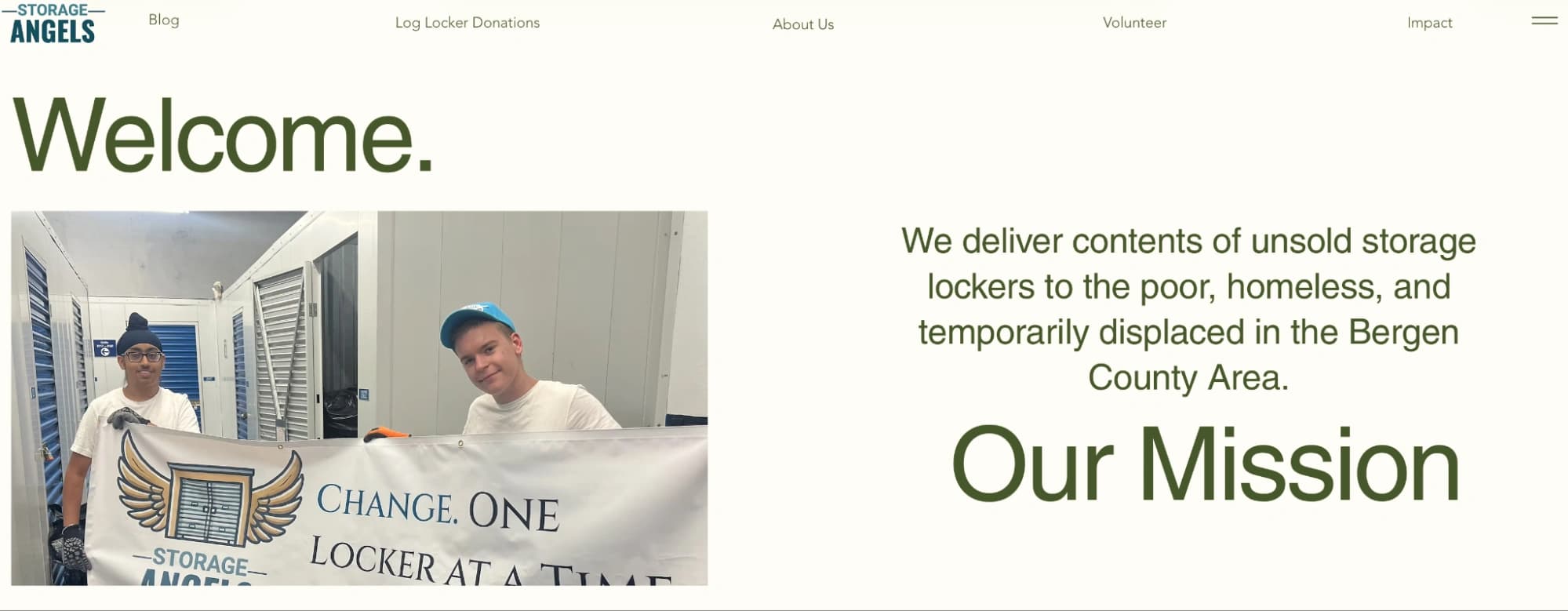
After the success of his first venture, Michael Haskell started Storage Angels, an organization that delivers unsold storage lockers to the underprivileged. This has further driven engagement, as the organization holds regular volunteer cleanouts on weekends and generates attention through word-of-mouth.
8. Corporate voiceover from a bedroom closet
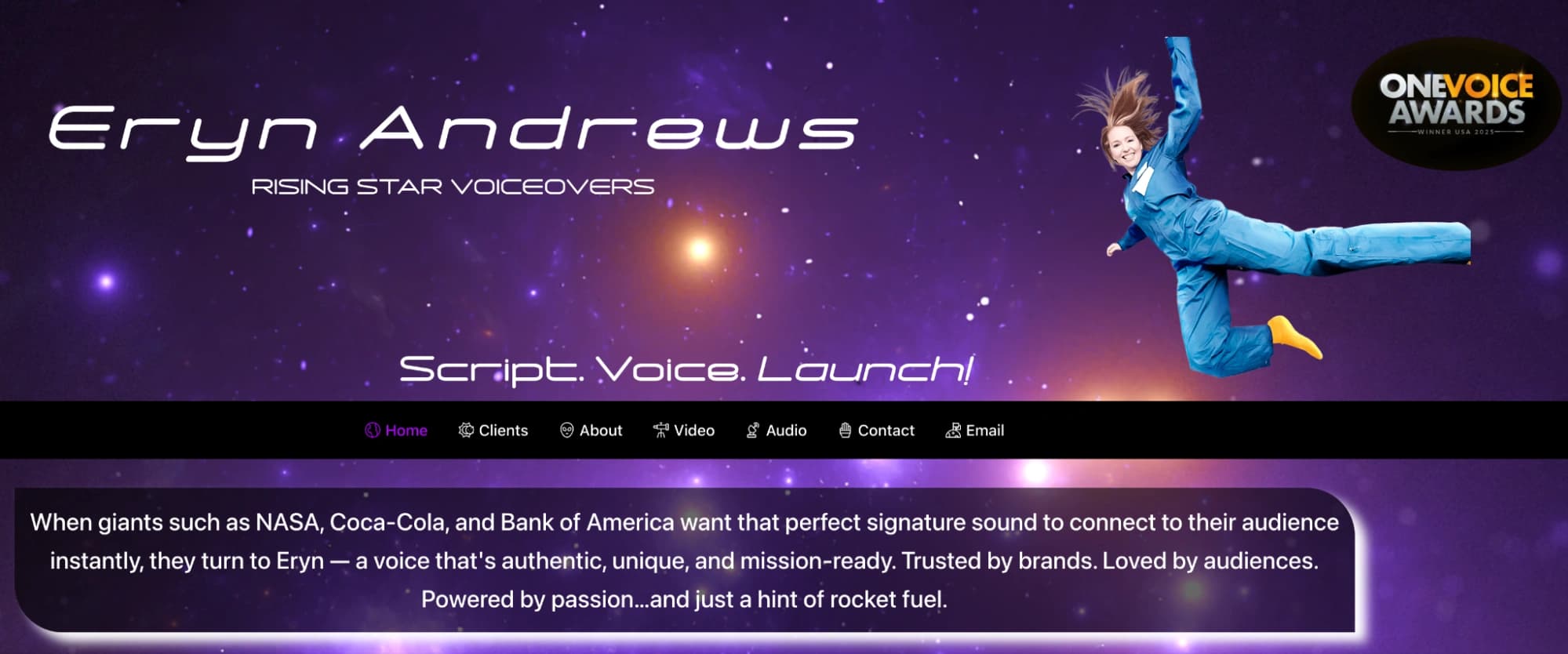
Eryn Andrews, 41, is a human performance engineer at NASA's Johnson Space Center, where she studies how astronauts move in spacesuits and has worked since 2008. The booth is her guest bedroom closet.
The business is simple: she records internal corporate announcements, phone systems, and workplace training videos, for giants such as PetSmart and Coca Cola.
- Startup cost: roughly $200 total; a voiceover class, a microphone, and a one-inch mattress topper from Walmart for soundproofing
- Time commitment: one to eight hours of recording per week
- Monthly revenue: over $32,000
- 2026 earnings to date: more than $227,000
- Lead source: still mostly Fiverr, plus referrals and her own site
CNBC published the numbers in August 2026. She has no plans to leave NASA. On why the work is holding up against synthetic voices, her read is that buyers are craving the authenticity of a real voice.
9. One flushable wipe, one brand
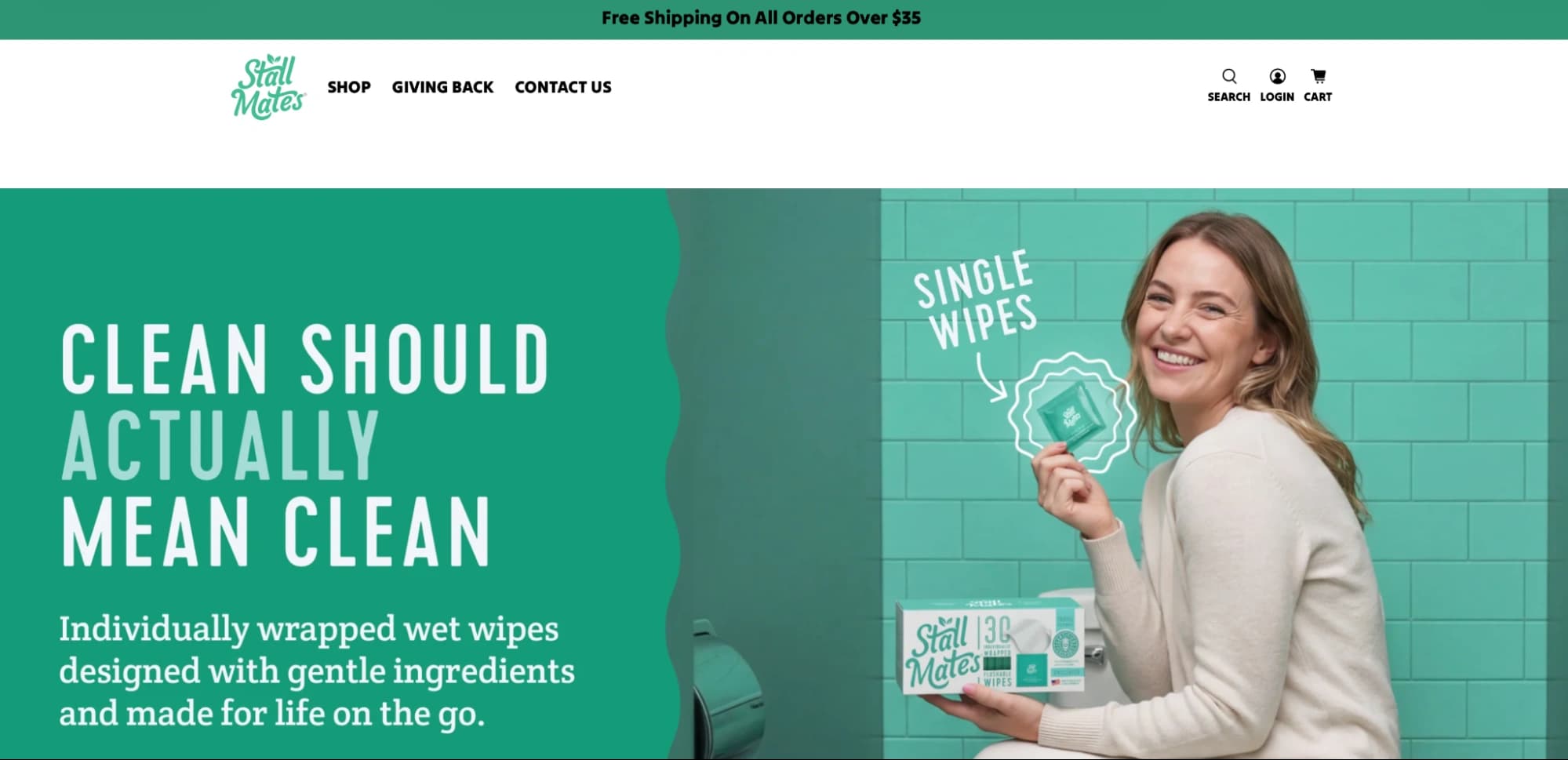
$3.8 million a year, from a product category most companies would rather not attach their name to. Kevin Corey, 41, teaches high school business in New York and runs Stall Mates, a flushable wipes brand, as a side hustle, and he walks his students through the highs and the losses as they happen.
Each wipe is individually wrapped, making them much easier to carry. They are also alcohol-free, paraben-free, fragrance-free, and made with soothing ingredients like aloe, cucumber, and chamomile. Stall Mates uses 100% solar energy in manufacturing, and unlike most other flushable wipes, theirs are certified as plumbing-safe.
The strategic point is narrowness. One product, one unglamorous problem, one name that owns it, not a bunch of offerings like toilet paper and tissues. Categories nobody wants to brand tend to have thin competition at the top, because the companies with real marketing budgets are busy defending products they enjoy talking about.
A single-SKU brand also carries almost no operational complexity: one supply chain, one shelf position, one reorder cycle. Corey still keeps his day job.
10. A laundry route that became a laundromat
In 2019, Christian Sanya was working as a medical laboratory technologist on a $76,000 salary and started washing other people's clothes through the on-demand platform SudShare. By 2022 the platform had paid her $46,000.
She and her husband used it to buy The Laundry Room in Lanham, Maryland; forty machines and four employees, which was producing roughly $24,000 a month as of CNBC's reporting in 2023. A second location was already in progress.
She still personally fulfills about twelve hours of laundry requests a day, with her husband and staff covering the gaps around her shifts. Her framing is that it isn't easy money, but it doesn't feel like work either.
Christian used a marketplace first to validate demand, building a decent customer book without using any of their own capital at risk. Once they had established demand, they bought up infrastructure and then built a strong business.
11. Holiday light installation
A business that operates for ninety days a year should not be able to support anyone, and for the first two seasons it usually doesn't.
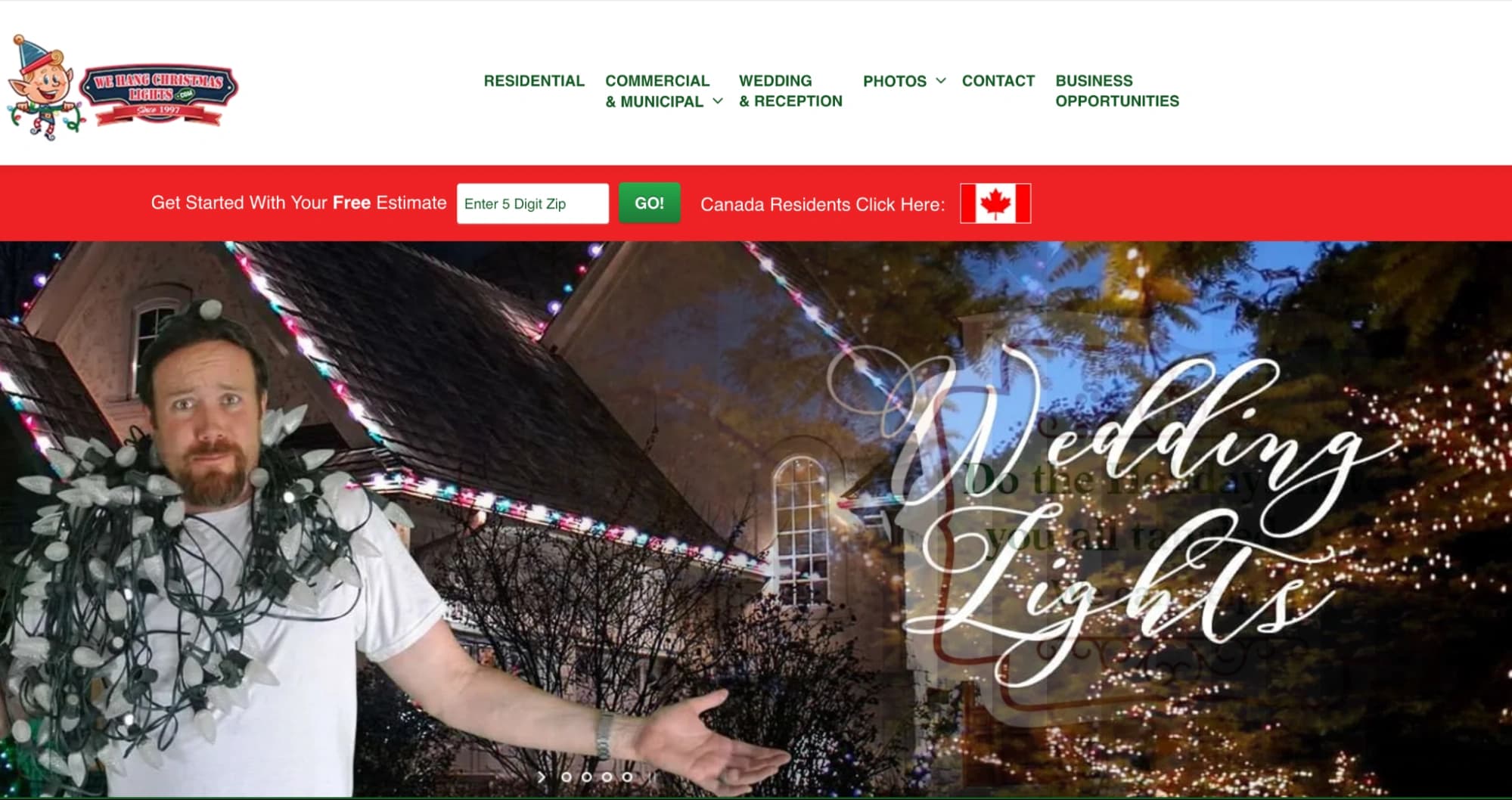
Josh Trees (yes, that’s his real name), has run We Hang Christmas Lights out of Temecula, California since 1997, and told The Penny Hoarder that customers pay him around $3,500 to light a house. Some numbers:
- Installation only: $2 to $5 per linear foot, most residential jobs $240 to $1,200
- All-inclusive: $6 to $9 per linear foot, covering lights, install, maintenance, takedown, storage
- Permanent LED systems: $20 to $40 per linear foot, $2,000 to $8,000 per home
Permanent lighting is what converts a seasonal scramble into a renewal cycle. Operators who skip that tier rebuild their revenue from zero every October.
12. Mobile IV hydration
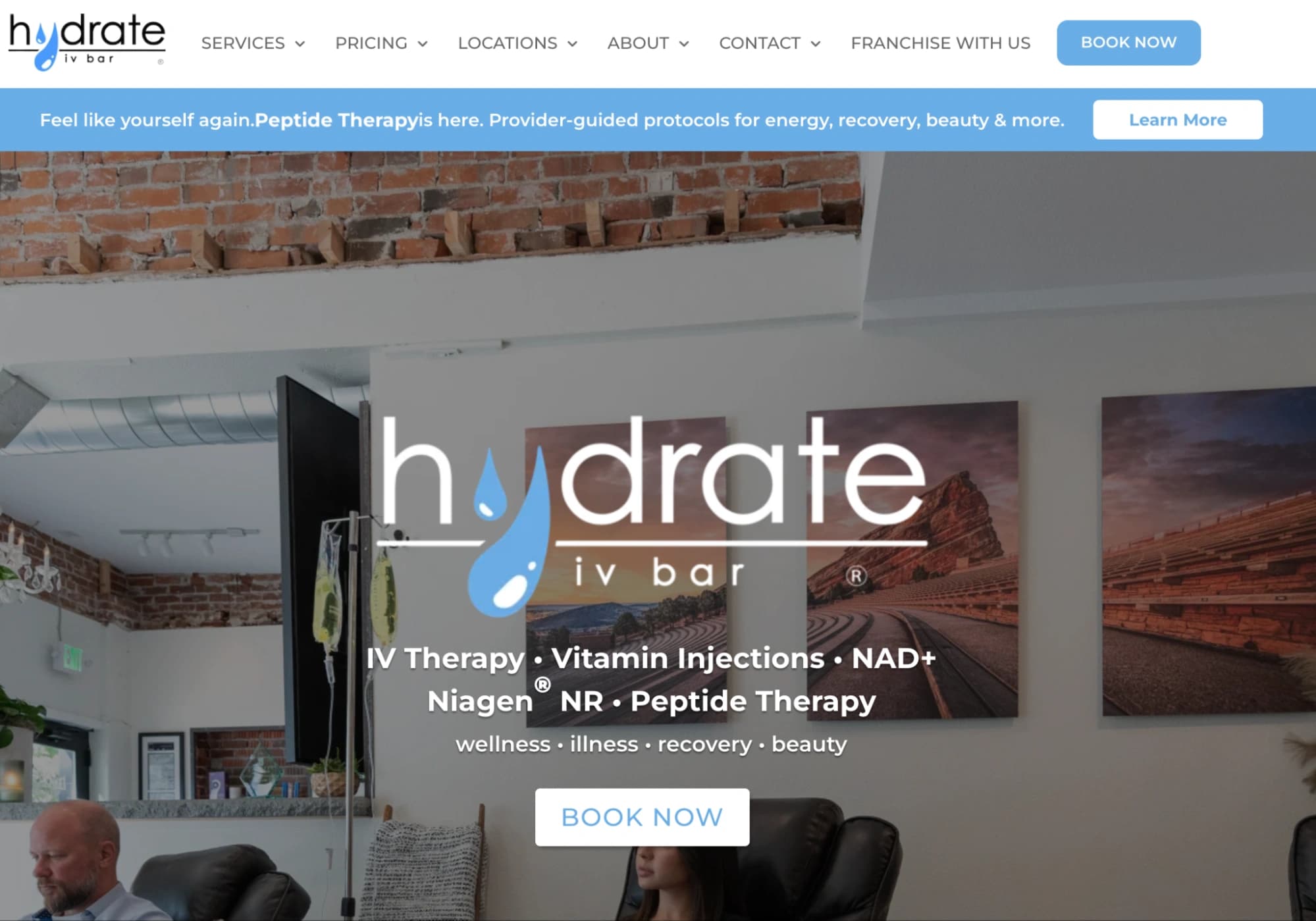
Oregon's medical board treats elective IV therapy as the practice of medicine rather than a spa service, and it is not the only one. That single classification governs who may own the business, who may administer, and what a compliant encounter actually costs, which is why the pricing looks generous and the margins don't behave the way the pitch decks suggest.
Hydrate IV Bar, a mobile IV drip therapy company, lists several services around $149 to $159.
Supply cost per bag is genuinely low. What eats the difference is clinical labor, physician oversight, malpractice coverage, and, for mobile operators specifically, travel time, since a nurse in traffic has stopped billing.
Ownership structure is the real trap. Corporate-practice-of-medicine rules in many states require a non-clinician owner to sit behind a management services organization. California's nursing board stated in 2026 that RNs and APRNs may not compound medications under state law even at a prescriber's direction, which limits what a mobile operator can legally mix in a vehicle.
13. Cleaning curbside trash bins
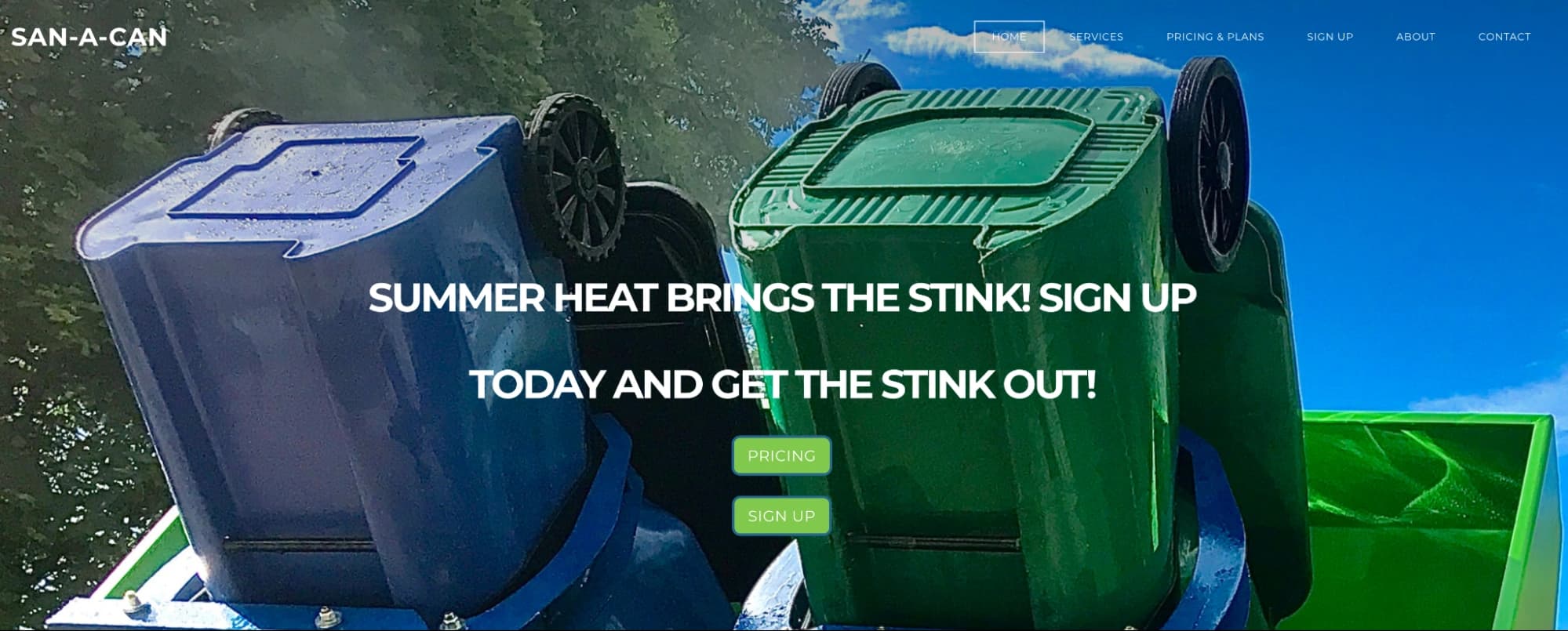
Route density decides the success of businesses like San-A-Can. A trailer or truck carrying a hot-water pressure system and a wastewater recovery tank services bins curbside on collection day, and the gap between a profitable operator and a merely busy one is whether the next stop is four houses away or four miles.
Subscription pricing sits around $25 to $30 a month, charged automatically. The recovery tank isn't optional: without it the job leaves what the trade calls garbage juice on the customer's driveway, which is the entire reason homeowners weren't doing this themselves.
The company uses an ingenious marketing tactic: using door hangers that are dropped the morning after pickup, at a time when the bins smell their worst. It’s the perfect trigger that causes people to call and inquire.
14. Training your own competitors
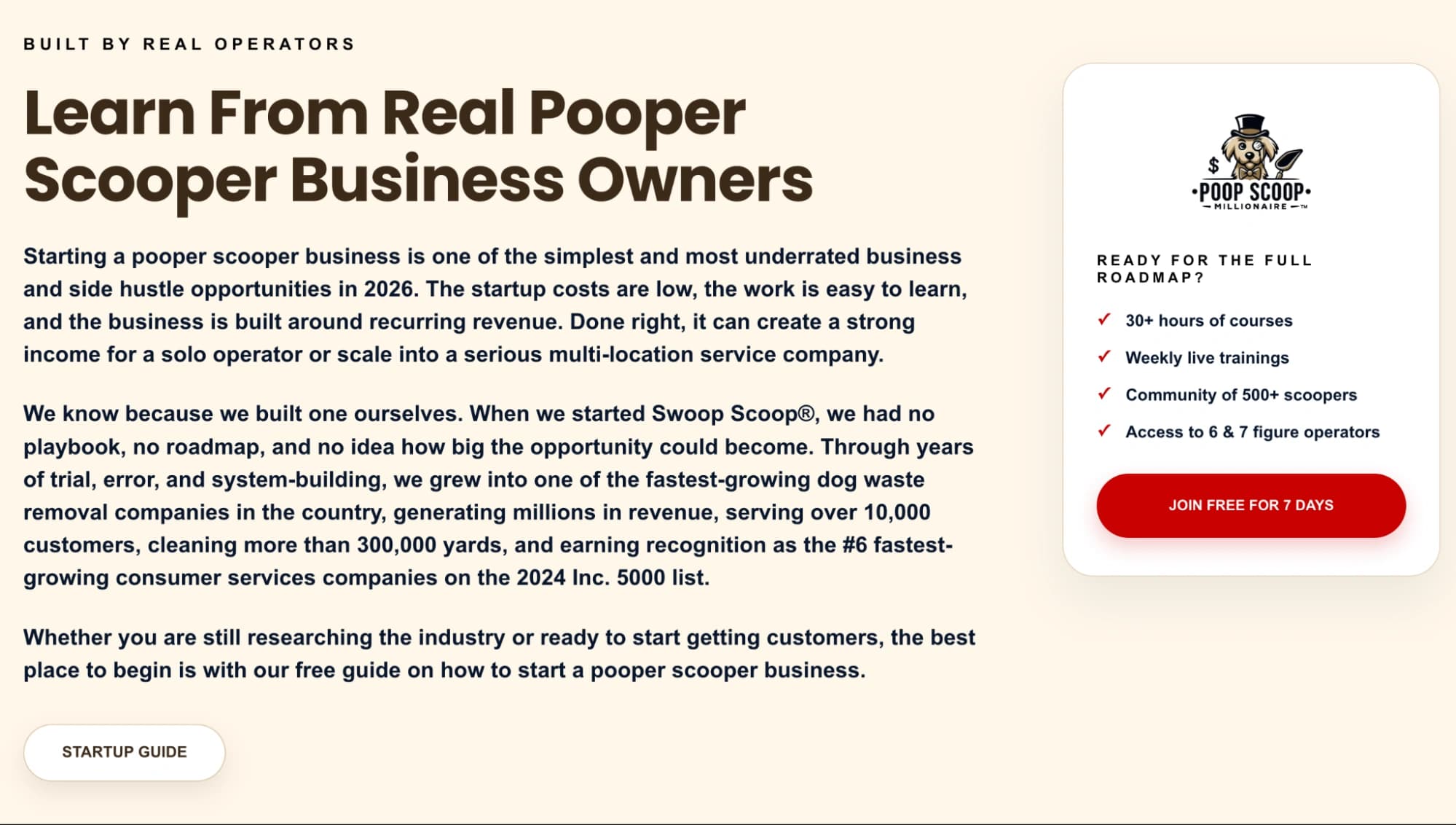
We’ve talked about William Milliken before, but he deserves a second mention on this list. Teaching people to enter your industry sounds like a mistake, and William Milliken argues the reverse: as new companies advertise, search volume for the service has doubled and tripled year over year, which makes every market he moves into cheaper to enter.
Milliken built Swoop Scoop into a $3 million-plus scooping operation, then turned the knowledge into a second business, Poop Scoop Millionaire. Here’s how it’s doing:
- Poop Scoop Millionaire: $69 a month for a community forum plus 30+ hours of classroom material
- Cadence: two to three live sessions weekly, a monthly Q&A with Milliken
- Reported revenue: approaching $1 million a year on its own
- ScoopCon: an annual conference; more than a hundred people flew to Coeur d'Alene, Idaho to attend
- Reach: a 10,000-subscriber YouTube channel and an UpFlip feature past 3 million views
Krupin runs a smaller version of the same play — coaching and sponsored content added about $22,000 to her 2024 income. The strategic payoff is optionality: a national network of operators you trained is also a pipeline of routes to buy or franchise later. Category evangelism costs less than category defense.
15. Specialty ice cream, in the right order

Masala chai ice cream sold at outdoor markets in New York is not an obvious route to $2.8 million a year, and Pooja Bavishi, a 42-year-old former urban planner, spent several years deliberately choosing expansion over profit to get there.
Malai now draws about 80% of revenue from brick-and-mortar shops that are each individually profitable, built on $1.8 million in total outside funding across a 2023 seed round and a 2025 bridge, with Bavishi still holding majority ownership.
She told CNBC in May 2026 that the company reached profitability in 2024 once several locations hit their stride, and that wholesale and e-commerce, including grocery and Goldbelly, nearly doubled the same year, because retail had finally generated enough brand awareness to make the grocery conversation possible.
What separates these from the ideas that don't work
Recurring billing is the strongest single predictor of survival. Krupin, Tom, Sanya, the bin cleaners, and the permanent-lighting installers all convert one-time labor into a subscription, which means sales cost is paid once and revenue arrives whether or not anyone is selling this month.
Unpleasantness functions as a competitive advantage. Categories involving human waste, animal waste, or garbage juice stay uncrowded no matter how good the margins get, because the people best equipped to compete have other options and take them.
- Location arbitrage: Donatell and the LJ's Lil' Café pair run ordinary businesses paying below-market rent for above-market traffic
- Expertise arbitrage: Mikula, Andrews, and Milliken sell knowledge the buyer could acquire, priced against their unwillingness to acquire it
- Sequence discipline: Bavishi and Sanya both built demand in a cheap channel before buying expensive infrastructure
The pattern that consistently fails is the inverse: a genuinely novel product in a category with no established buying behavior, where the operator has to manufacture demand before capturing any of it.
How to narrow it down
Four questions do most of the filtering.
- Does the customer pay monthly, or do you resell them every time?
- Is there a physical, legal, or emotional barrier keeping competent competitors out?
- Can you reach paying density inside a fifteen-minute drive?
- Can you start before you have capital, or does the first dollar require a truck?
Eleven of these fifteen are local service businesses run by one person or a small crew. On day one they need a site that ranks locally, a way to take bookings, and a way to send invoices, and none of them need a developer. Durable builds that in a few minutes, so the first customer call has somewhere to land. Build your dream business today.