Most AI advice aimed at small business owners stops at speed. Draft the email faster. Write the caption faster. Clear the admin pile faster. All of that’s genuinely useful, but in this post, we want to focus on something that directly impacts your bottom-line: how AI can help you boost sales.
Adoption isn't the interesting question anymore. 58% of small businesses said they use generative AI, up from 40% in the previous year, according to the U.S. Chamber of Commerce's Empowering Small Business report published in August 2025. Nearly everybody is using it.
For a small business owner, timing and resources are everything. They don’t have a lot of either, which is why when used correctly, AI tools can have a significant impact on boosting sales. Here’s 8 ways to do just that.
1. Building an online presence
Having an online presence, like a website, is the single most important lever that you can pull to boost sales. If most of your business today is coming through word-of-mouth or referrals, it might be time to build your site.
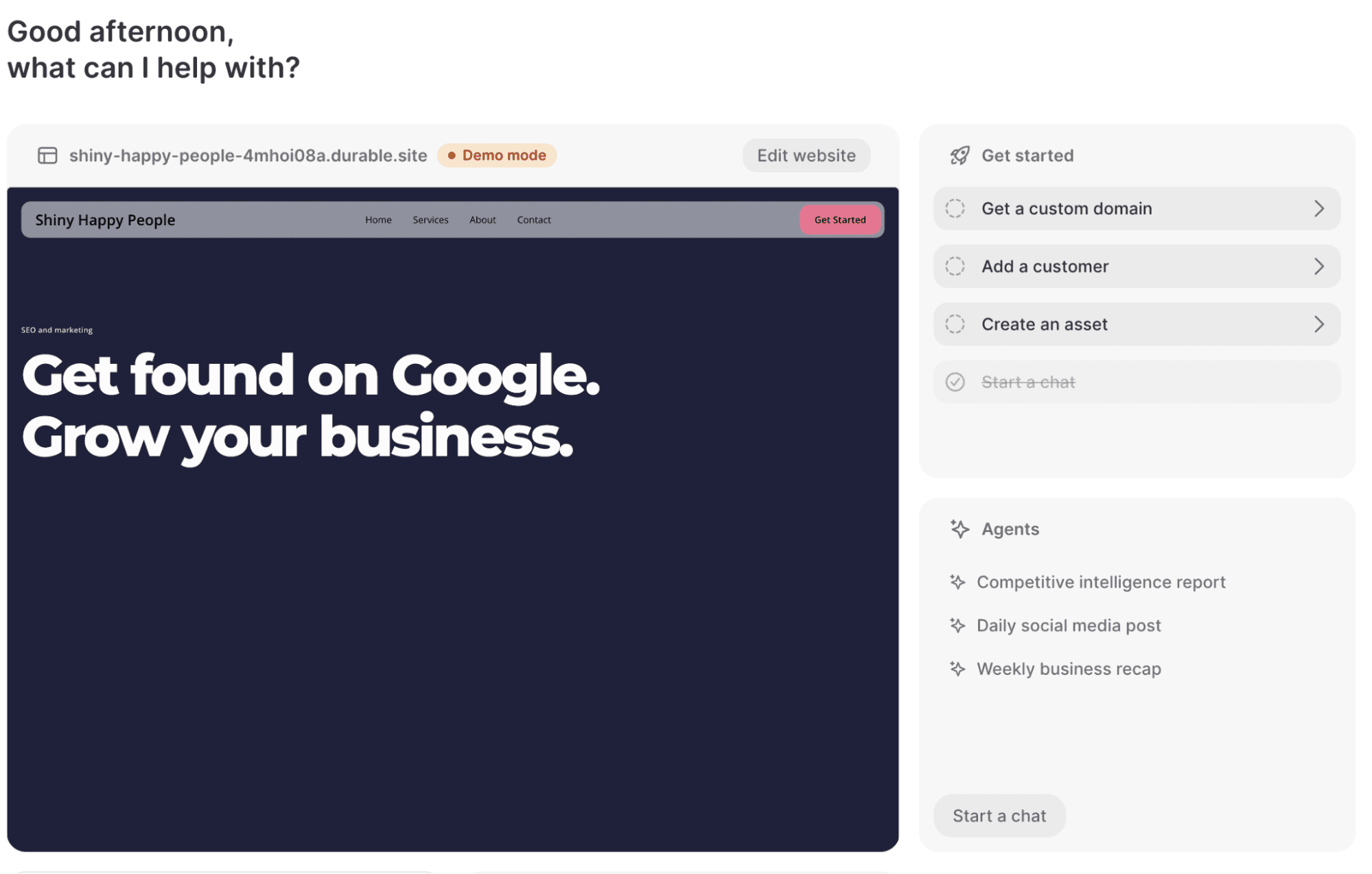
Many solopreneurs used to hesitate at the idea of building their site, simply because the costs were just way too variable. Also, if you’re not technical, you pretty much had no idea where your money was going. Agencies would charge anywhere between $500 to $10,000 for simple websites, which scared most businesses.
An AI website builder like Durable simplifies that protracted process, taking the costs down to under $50/month, and covering everything, from hosting to domain name registration, and includes tools and features that you’d otherwise have to pay for separately, like SEO & GEO.
You describe your business in a sentence and Durable generates the full site, with service copy, images, and a lead capture form (which you can customize). You edit from there instead of commissioning a draft and waiting six weeks. Hosting, SSL, unlimited traffic, and the structural SEO that lets Google read your pages are in the subscription.
2. Answer new inquiries in minutes
Small business owners mostly don’t have dedicated support teams. Queries usually land on their phone or email, and it can be quite difficult to respond when you’re already at a job.
Someone with a burst pipe messages three plumbers. Whoever answers first gets the job.
With the right AI tool, you can close that gap pretty easily. A form submission gets an instant reply that answers the obvious next question instead of confirming receipt.
In many cases, the key is to be able to respond in a timely fashion, even if you can’t schedule the job right away. Simply letting a prospect know that you’ve acknowledged their message and will get back to them within a certain time period goes a long way in locking down a lead.
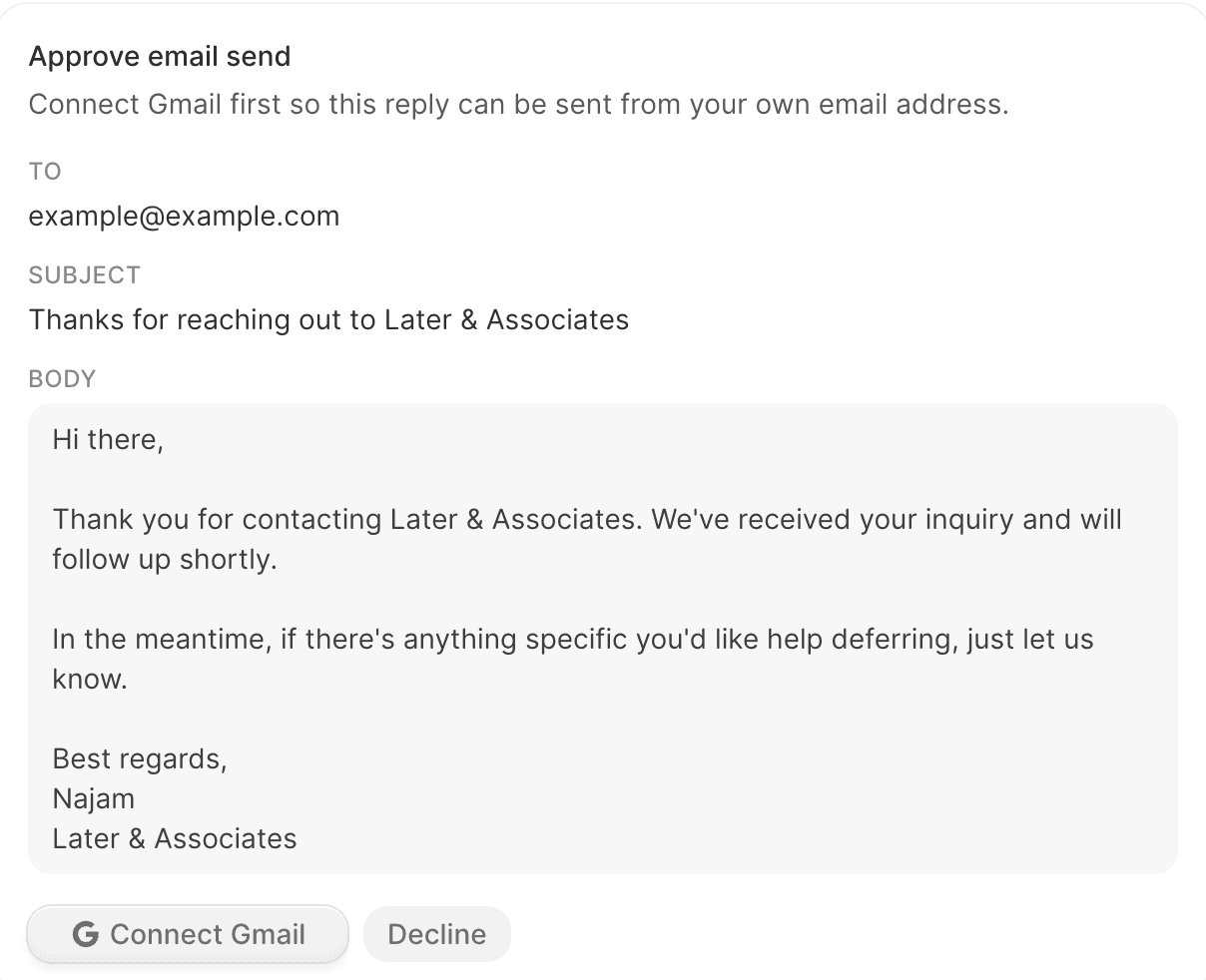
Durable's Lead agent replies to inbound leads automatically on paid plans, with a monthly allowance that rises by tier, so the cost is usually nothing on top of a subscription you hold already.
This wins the jobs where you were one of three names and nothing much separated you. It won't rescue a lead who wanted something you don't sell.
3. Analyze customer data in detail
Analyzing customer data sounds like a job for a company with an analyst on staff. It isn't, because you need four or five questions answered, not a dashboard. Say you run a residential cleaning business with 120 active clients. Export whatever you already have: client list, job dates, service type, amount billed, cancellations.
Replace the names with numbers first, since customer identities shouldn't go into a tool whose logs you don't control. Then hand the file to an AI assistant and ask it for plain things. Which neighborhoods carry the highest average job value? Which clients booked twice and never came back? How many months a recurring client usually lasts before they drift? Which clients are overdue against their own booking pattern?
The answers tend to be uncomfortable, which is what makes them worth having.
Each one has a dollar path attached to it. If deep cleans in one neighborhood cancel at twice the rate of another, that's ad money to move rather than money to spend. If one-off clients who book a second time almost always become recurring, the second visit is the one to discount, not the first.
4. Show up when customers ask AI instead of Google
Your next customer may never open Google. They will type "best emergency electrician in Vancouver" into ChatGPT, get three names, and just pick one. Being fourth on page one of a search engine will do nothing for you.
Search engine optimization and generative engine optimization are both critical disciplines that can help small businesses grow without taxing themselves under the burden of paid spend. With AI LLMs, people no longer have to go through the exercise of browsing multiple sites and finding the business that best fits their requirements. You can just ask the AI assistant, and it’ll give you an answer. So, how do you show up in those answers?
An AI assistant hands one person a short answer, and a short answer has room for about three businesses. Getting into that set depends less on your website than on everything about you that lives elsewhere: whether your name, address and phone number match across directories, whether your reviews are recent, whether anyone else online has mentioned what you do.
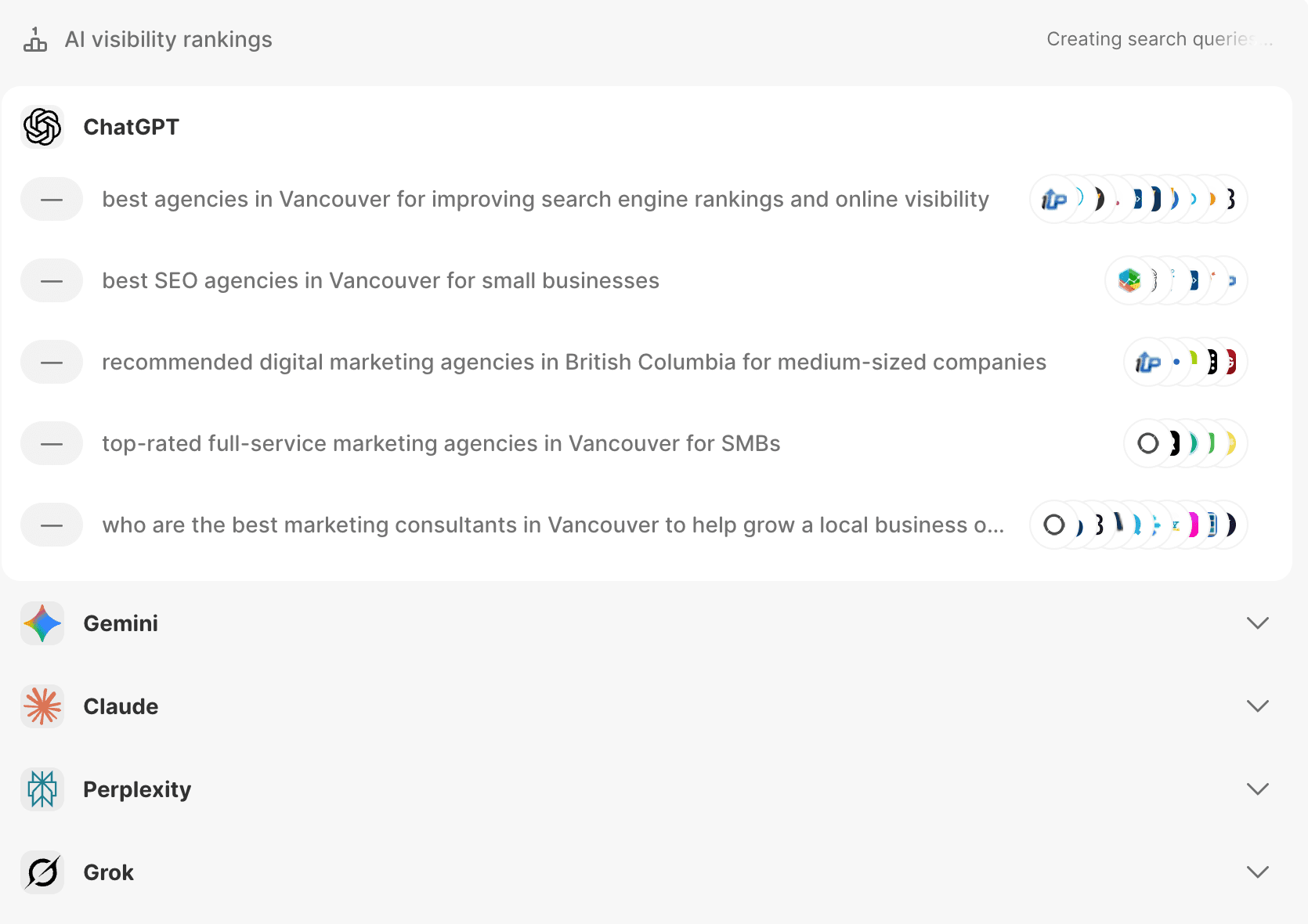
Durable's SEO & GEO tool shows where your business ranks when people ask ChatGPT, Gemini, Grok and Perplexity for a recommendation. It gets you listed across directories including Google Business Profile, Yelp, Apple Maps and Angi, flags details that have drifted out of sync, and rolls the picture into a visibility score from 1 to 100.
Using smart AI recommendations and suggestions, it helps you not just grow your footprint outside of your website, but helps you answer questions that your audience is asking, making it easy for you to show up in answers and get mentioned by AI LLMs.
5. Let your website ask the questions you'd ask
"I've seen a 50% increase in client leads since creating my website with Durable." Pro Chowdhury said that about Prolific Pours, the mobile bartending company he started in New York after leaving a career in corporate finance. The site turned a skill into an inquiry stream, and it has since helped book him events including a non-alcoholic happy hour for Apple.
Creating a website used to require entrepreneurs to hire an agency or a freelancer, and shell out significant sums of money. With AI tools like Durable, it requires you to just add a prompt. Plus, you can build in lots of functionality into your site to really hone in on your audience.
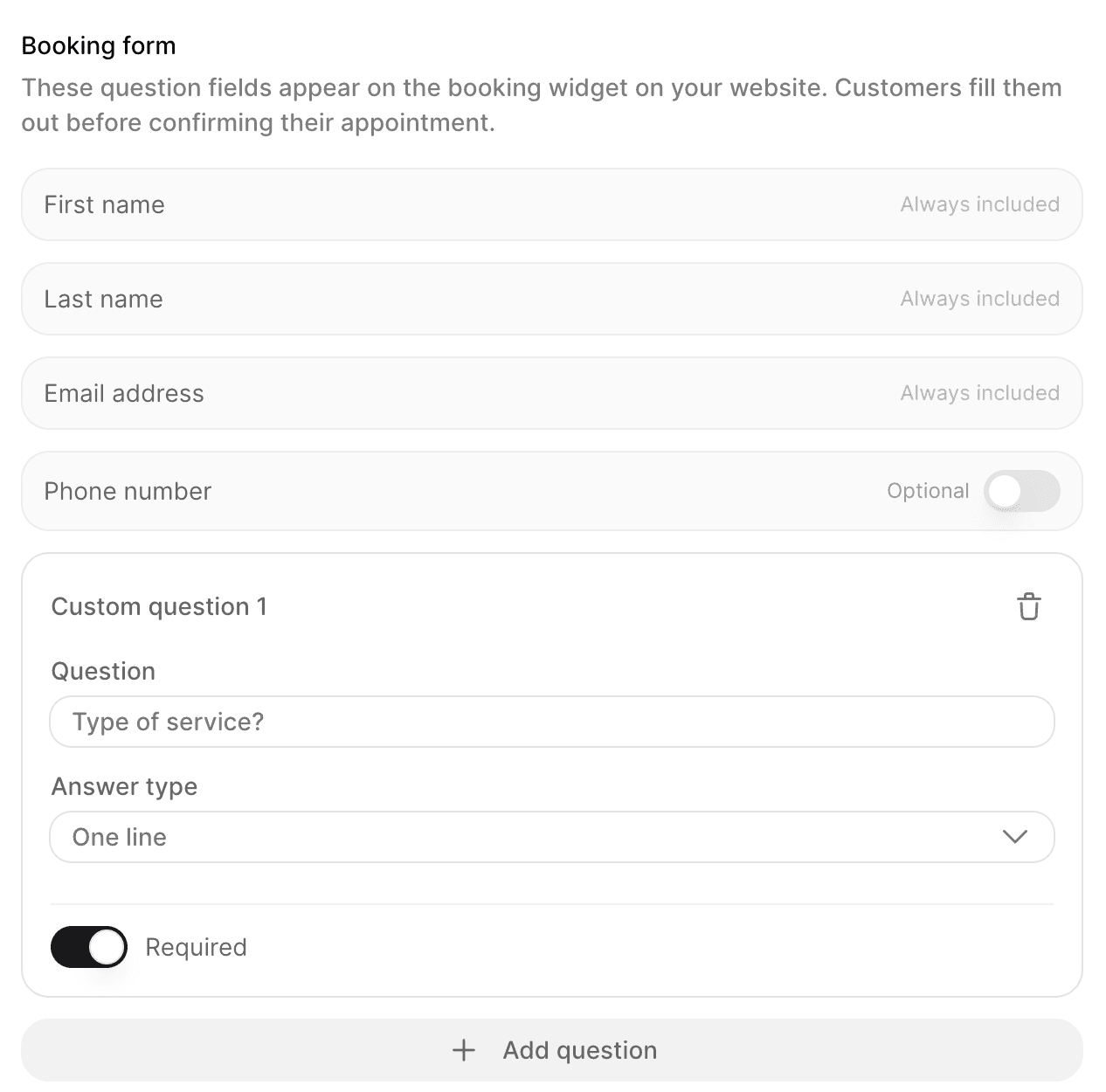
The AI layer is what happens once someone lands. Pre-booking questions on a booking form collect the two or three things you'd ask on the phone anyway. Square footage. Access. Whether there's a dog. The date or time.
By the time the request reaches you it's either a real job with details attached or it has filtered itself out. Custom intake questions sit on the paid plans, setup runs about twenty minutes, and the payoff is skipping the same opening call forty times a month.
6. Automate follow-up with prospects
You’d be surprised at how many small business owners are still doing follow-ups manually. If somebody reached out for a service but then forgot about it, it’s imperative that you set up a process to follow up with them at regular intervals.
However, this is a tedious process, and with solopreneurs juggling multiple jobs, it can get lost in the shuffle.
It usually means writing each message from scratch, because a generic note asking whether they had any more thoughts gets ignored and you know it. Multiply that by the nine conversations you had this month and you are running a small administrative operation on top of the work that actually pays you.
Most owners abandon it around the second week, not out of laziness but because the tracking costs more attention than any single follow-up appears to be worth.
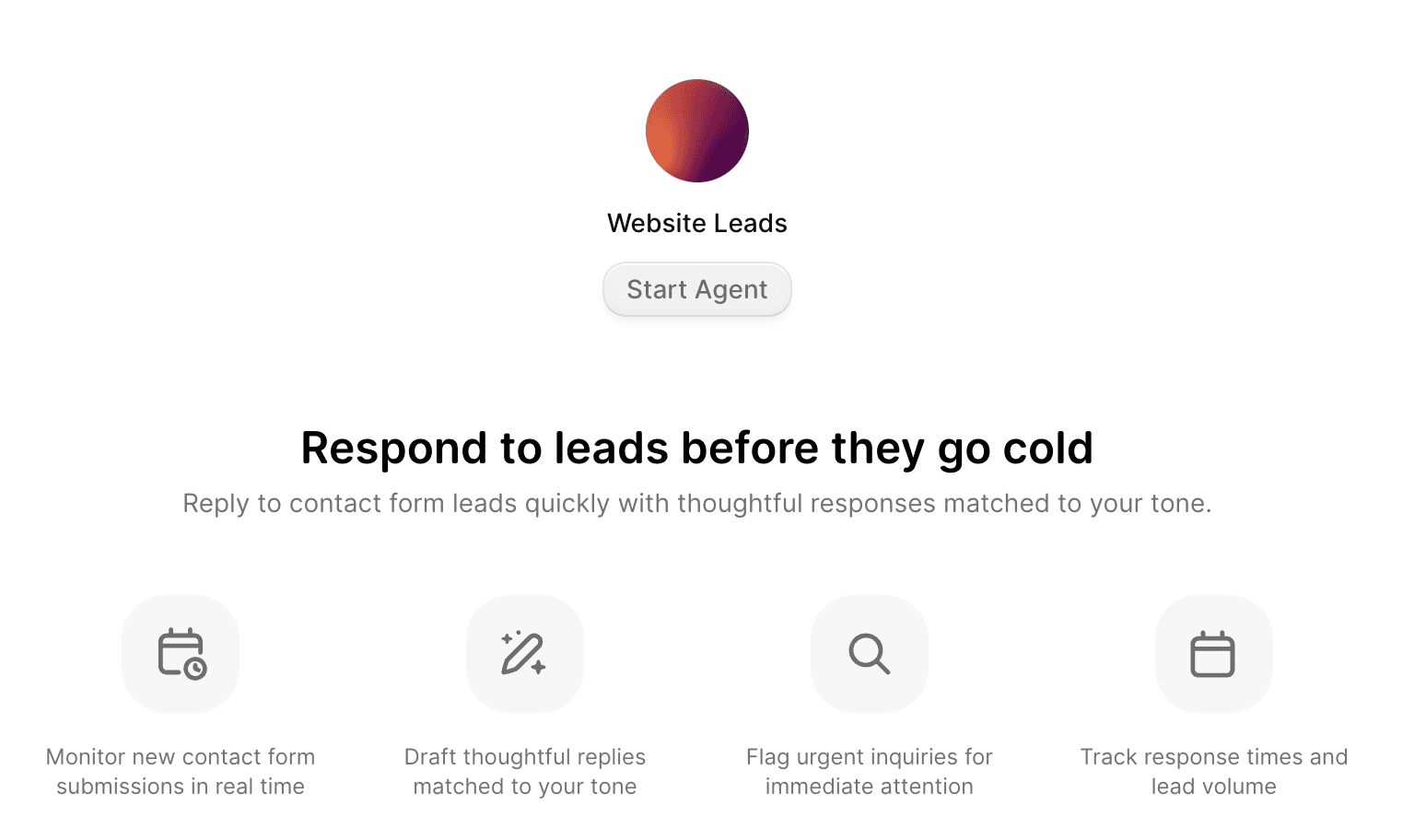
With Durable’s AI Agents, you could automate this process fully. Once you set it up, the agent can automate responses to leads that are sent to your website. If there are any urgent queries, they are flagged instantly, so you can address those first.
You can also tailor the responses in your tone so that each reply is personalized and sounds exactly like you.
7. Automate requests for customer reviews
Most people will remember a good job for just around two days. On the day of the job and the day after, a customer who is pleased with your work will write you a positive review, because the work is still fresh enough that they have specific words for it.
Business reviews on third-party websites like TrustPilot, Yelp, or even your Google Business Profile have become increasingly important today. When people search for a service provider, AI LLMs often look at these signals before recommending businesses. And obviously, it’s what many customers use before they choose to buy from a business.
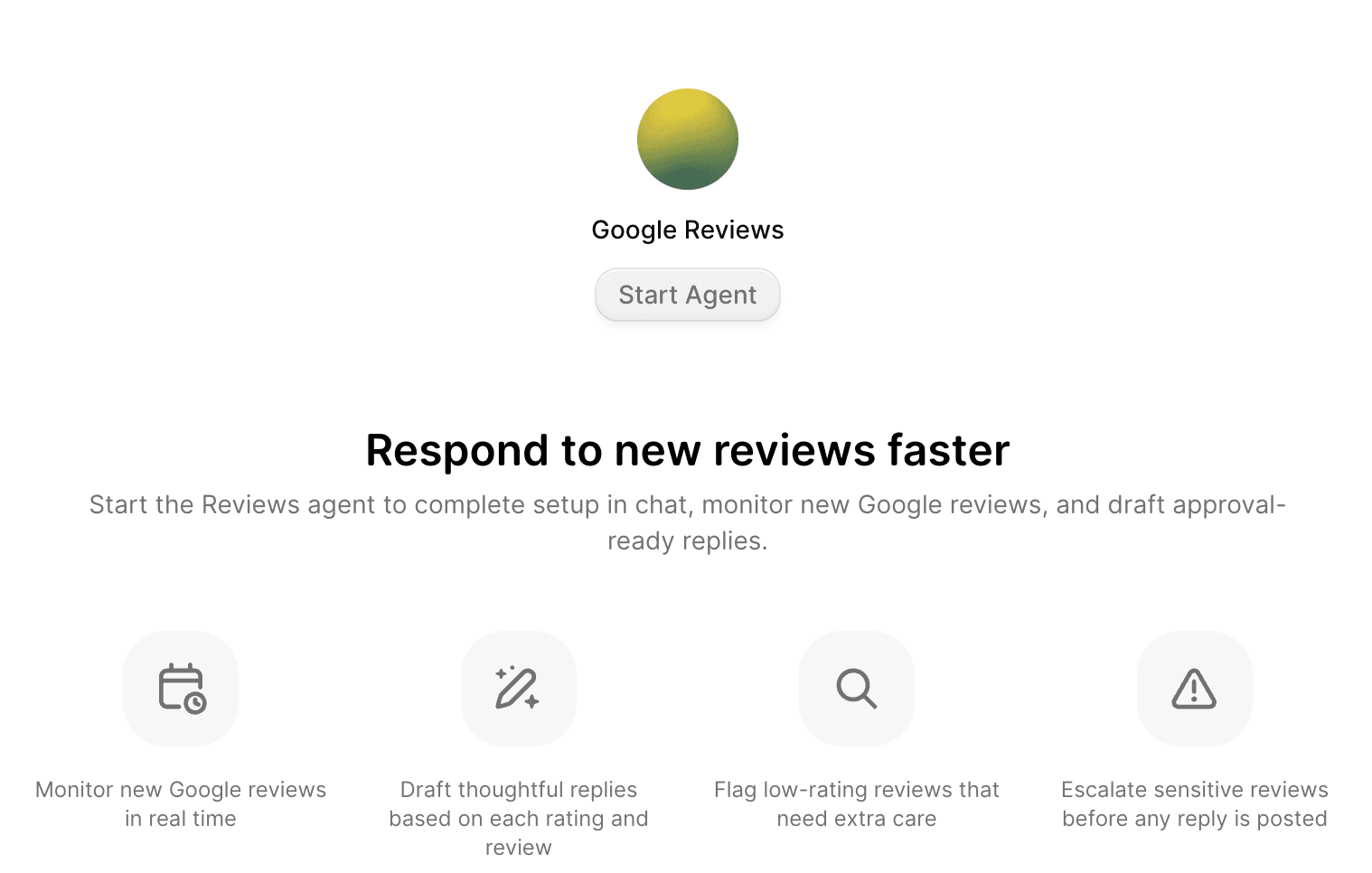
If you have a higher number of positive reviews in your city, your business will get cited. For many small business owners, doing regular follow-up and reminding customers to leave reviews is just not possible.
Using AI to automate this process just makes sense. Durable includes emailed review requests, so for most owners this is a setting rather than a purchase. Recent reviews are one of the off-site signals that determines whether an AI assistant names your business when somebody asks for a recommendation, so the same automation that raises your close rate also feeds your visibility.
8. Write the answers only you could write
What a buyer types is oddly specific. Not just "tree service" but things like "can you take down a tree twelve feet from the house?" Not "bookkeeper" but "do I need to register for GST as a sole proprietor?" Those are the questions you answer on the phone every week, for free.
Generic AI content doesn't compete for those queries anymore, because everybody has it. What competes is what you know from doing the work, like why a certain service costs extra, what permits are needed, and when it might be the cheapest to book.
Service professionals and SMB owners hardly have the time to prepare a comprehensive content strategy. Draft it with AI, then add the part that only comes from the job site.
Creating evergreen content on your site is what’ll help you set your business apart from your competition. If you show up in answers when people are searching for you, there’s a very high chance they’ll go to you when they need a specific service.
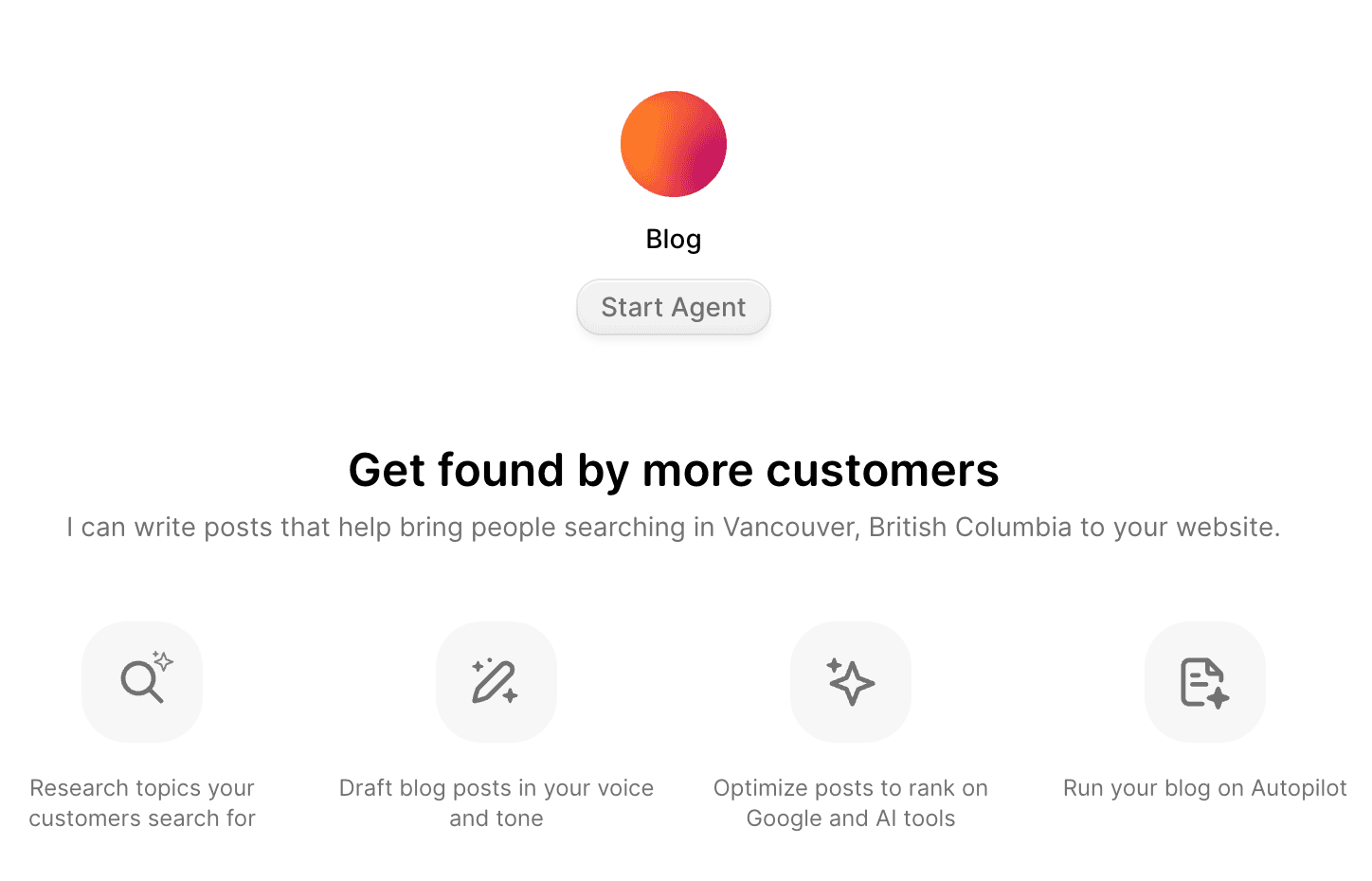
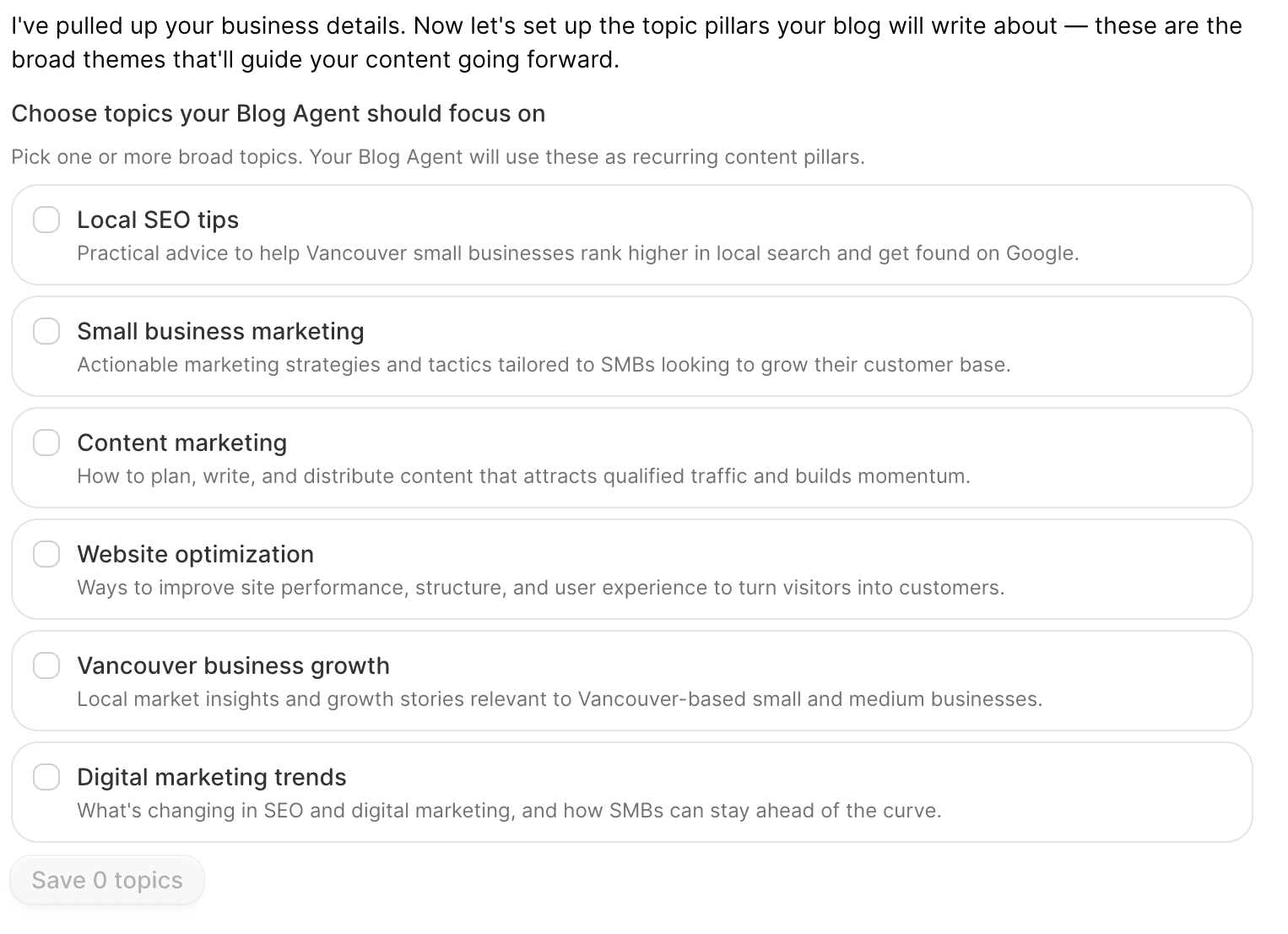
Plus, well-researched posts also start ranking well on Google and other AI LLMs, which means you’ll be able to generate more traffic to your site. Durable’s Blog Agent lets you define topic pillars (or you can let it recommend the best ones), and helps you build content that your audience would care about.
This, coupled with SEO & GEO research, ensures that the content you’re putting out is useful, valuable, and above all, tailored to your expertise.
Use AI to grow your business
With the right AI applications, you can easily get in the running with larger corporations. Durable helps you build a proper site, grow your online presence, create content, run a full marketing funnel, offer support to customers and prospects, and do a lot more using AI.